Energy management
Connect the energy-efficiency plan to daily vessel performance
Use a Plan–Do–Check–Act cycle to turn vessel data into targets, practical measures and an ongoing review of performance.
An energy-efficiency plan becomes more useful when its measures can be connected to operating data. Dipai’s SEEMP workflow links planning, implementation, performance checks and follow-up in one continuous cycle.
Plan using the vessel’s data
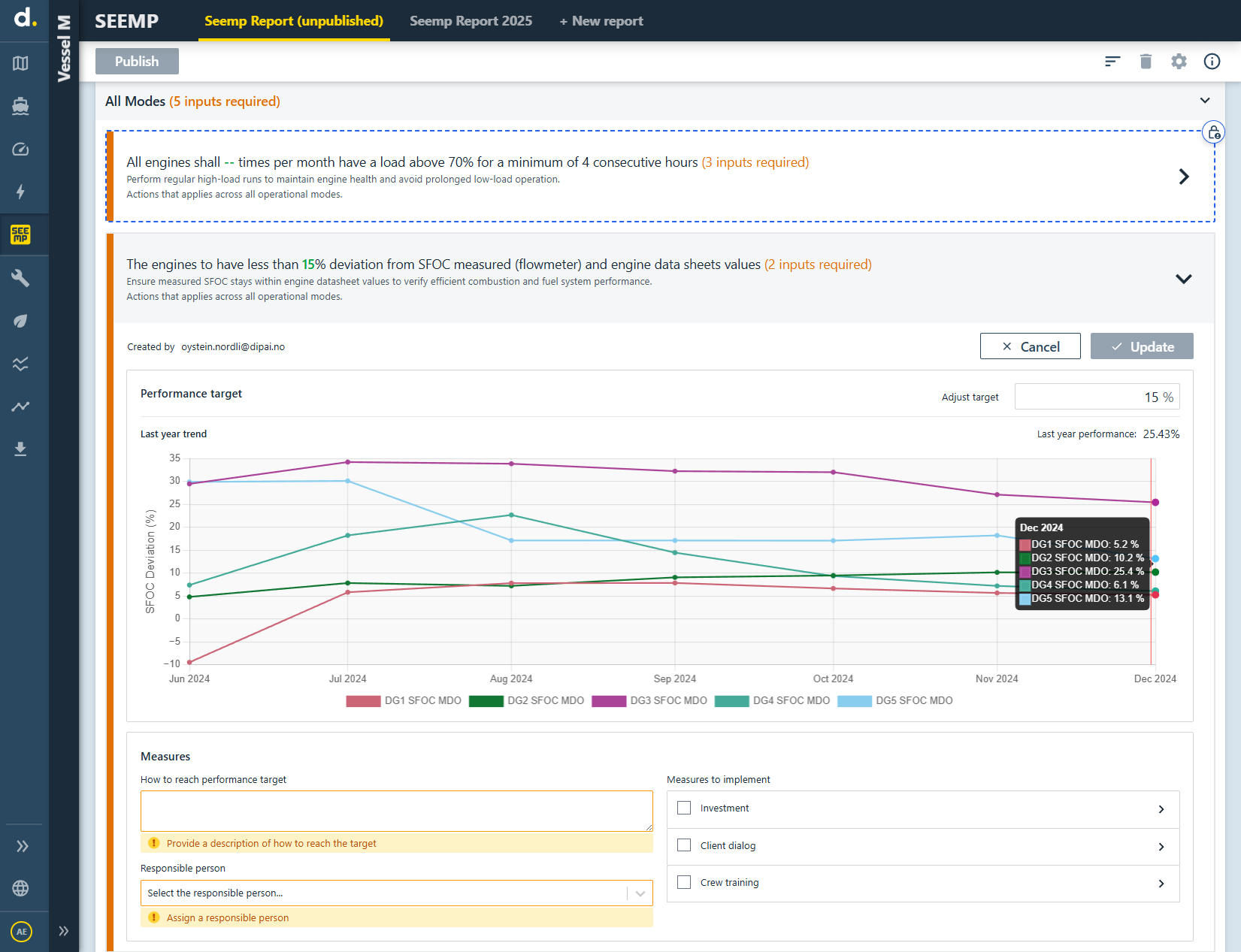
Review historical performance and set measurable targets. The planning view connects the chosen performance target to previous trends, the measures to implement and the person responsible.
The example includes engine SFOC deviation and engine-load practices, showing how a general efficiency objective can be translated into a specific operating target.
Do: put the measures into practice
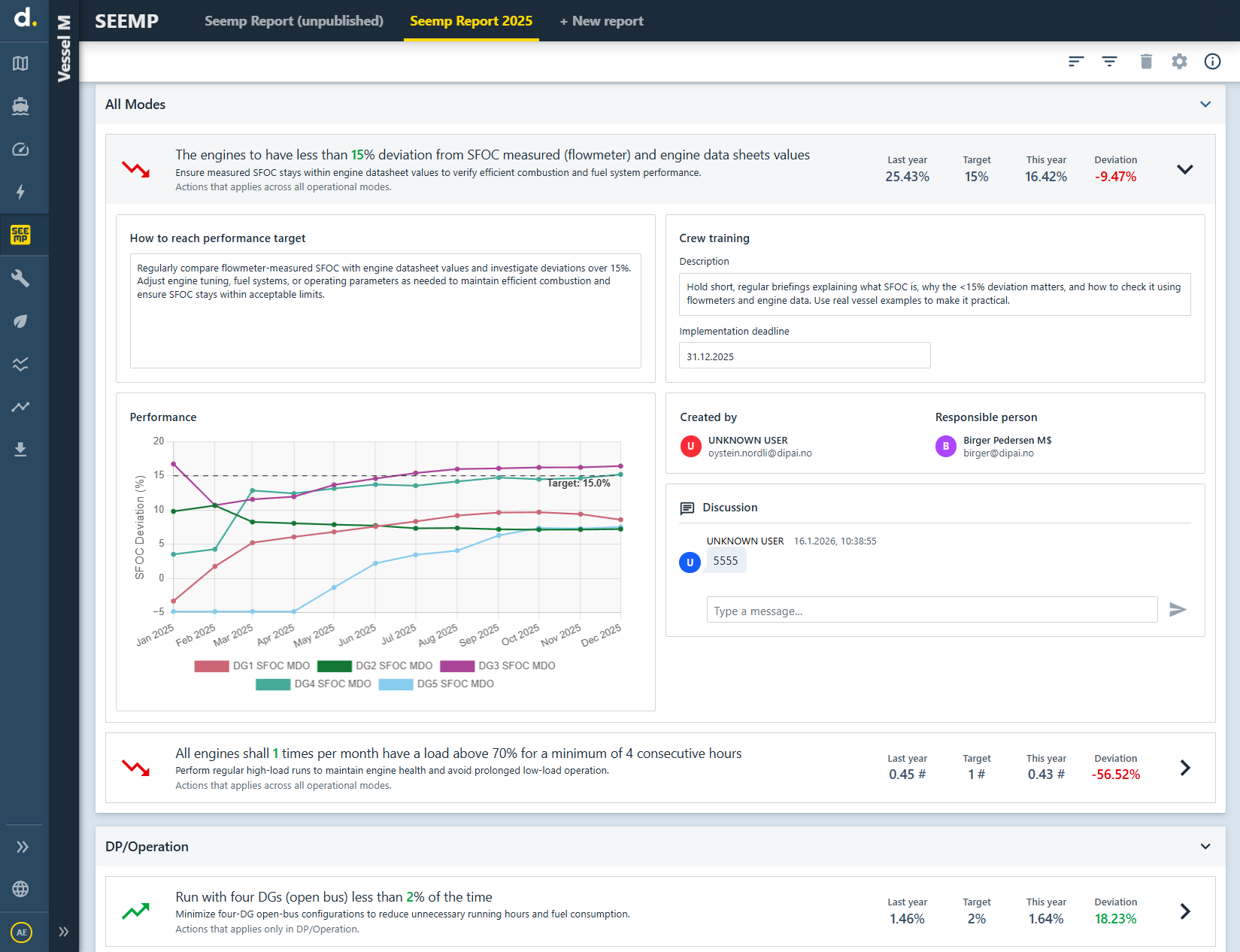
The workflow connects targets to practical actions. The example includes crew training and descriptions of how the performance target will be reached, with an implementation deadline and assigned responsibility.
Check actual performance
The performance view compares targets with the vessel’s measured trends. It brings the previous year, the target and the current result into the same view, helping the team see where follow-up is needed.
Act on the findings
The Plan–Do–Check–Act cycle returns the findings to the next round of decisions. Measures and targets can be reviewed in light of what the vessel data shows, connecting the energy-efficiency plan with an ongoing improvement process.
Application focus: connecting the Plan–Do–Check–Act cycle to measurable vessel targets, responsibilities and performance trends.