Fuel efficiency
Adjust eco speed to the operation ahead
A change from 12.5 to 8.7 knots reduced fuel consumption per nautical mile by about 28% and shortened waiting before operations.
- Change in sailing speed
- 12.5 → 8.7 kn
- Lower fuel use per nautical mile
- ≈28%
- Less waiting per operation
- ≈20–24 h
The vessel was sailing at a charter-required 12.5 knots, consuming unnecessary fuel and then spending a long time waiting before operations. Speed analysis provided a basis for discussing a different sailing speed with the client.
Look beyond transit speed alone
An arrival earlier than the operation requires can mean extra fuel use followed by a longer wait. In this case, the existing charter speed requirement was considered alongside the time spent waiting before work began.
Use vessel performance to support the discussion
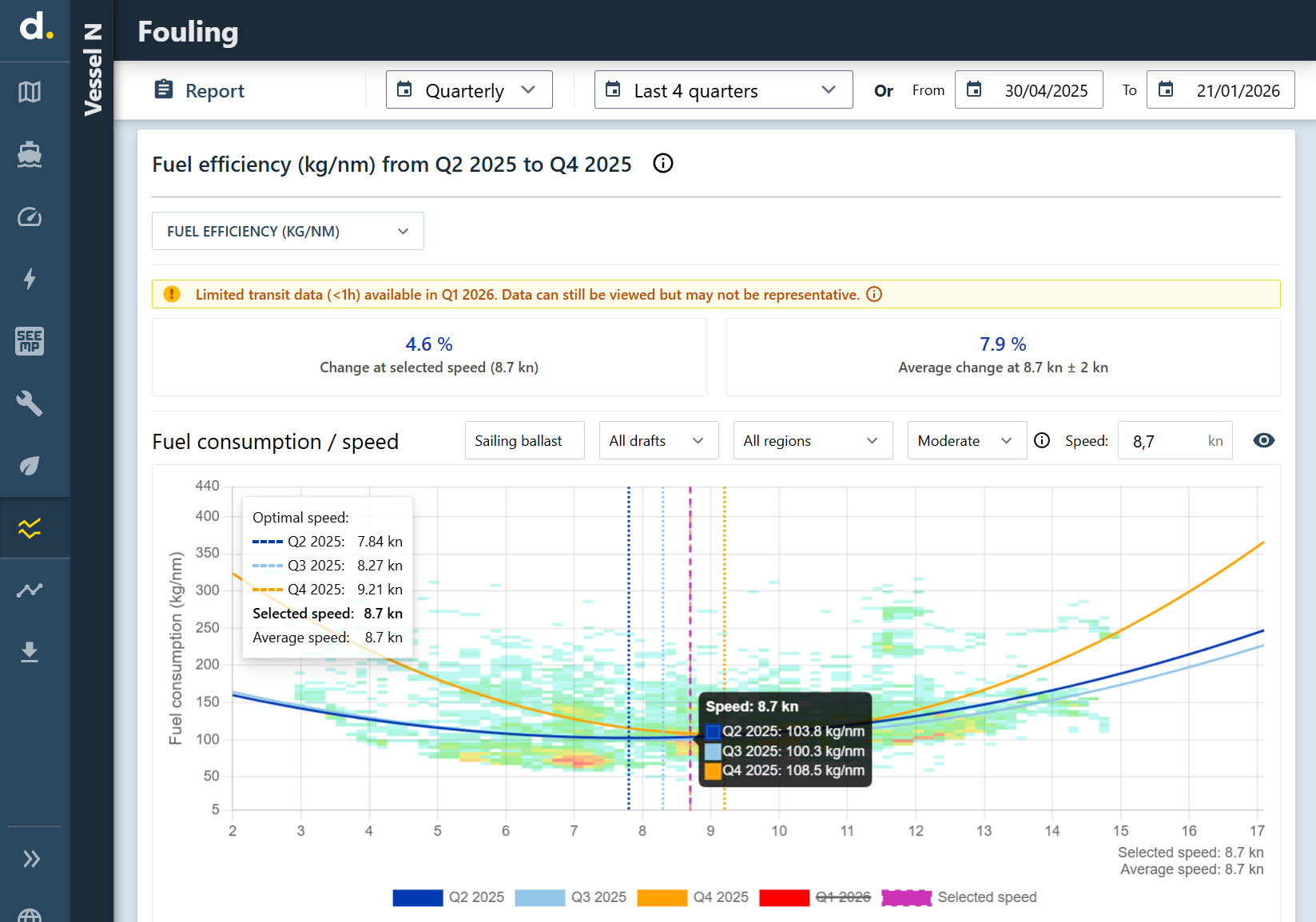
Dipai’s Speed Optimization Model identifies an optimal eco speed each quarter. The analysis relates fuel consumption per nautical mile to sailing speed, providing a data-driven basis for a recommendation to the client.
The operating decision in this case was to reduce sailing speed from 12.5 to 8.7 knots. The quarterly performance curves provide context for assessing that decision; the selected speed and each quarter’s modelled optimum are shown separately.
Reduce fuel use and pre-operation waiting
For Q4 2025, the presentation reports an approximately 28% reduction in fuel consumption per nautical mile and about 20–24 fewer waiting hours per operation.
The case connects speed selection to the operation that follows the voyage, allowing vessel performance and the client’s requirements to be considered together.
Results reported for Q4 2025, following the change in sailing speed from 12.5 to 8.7 knots.