Fuel efficiency
Use the engine configuration the voyage needs
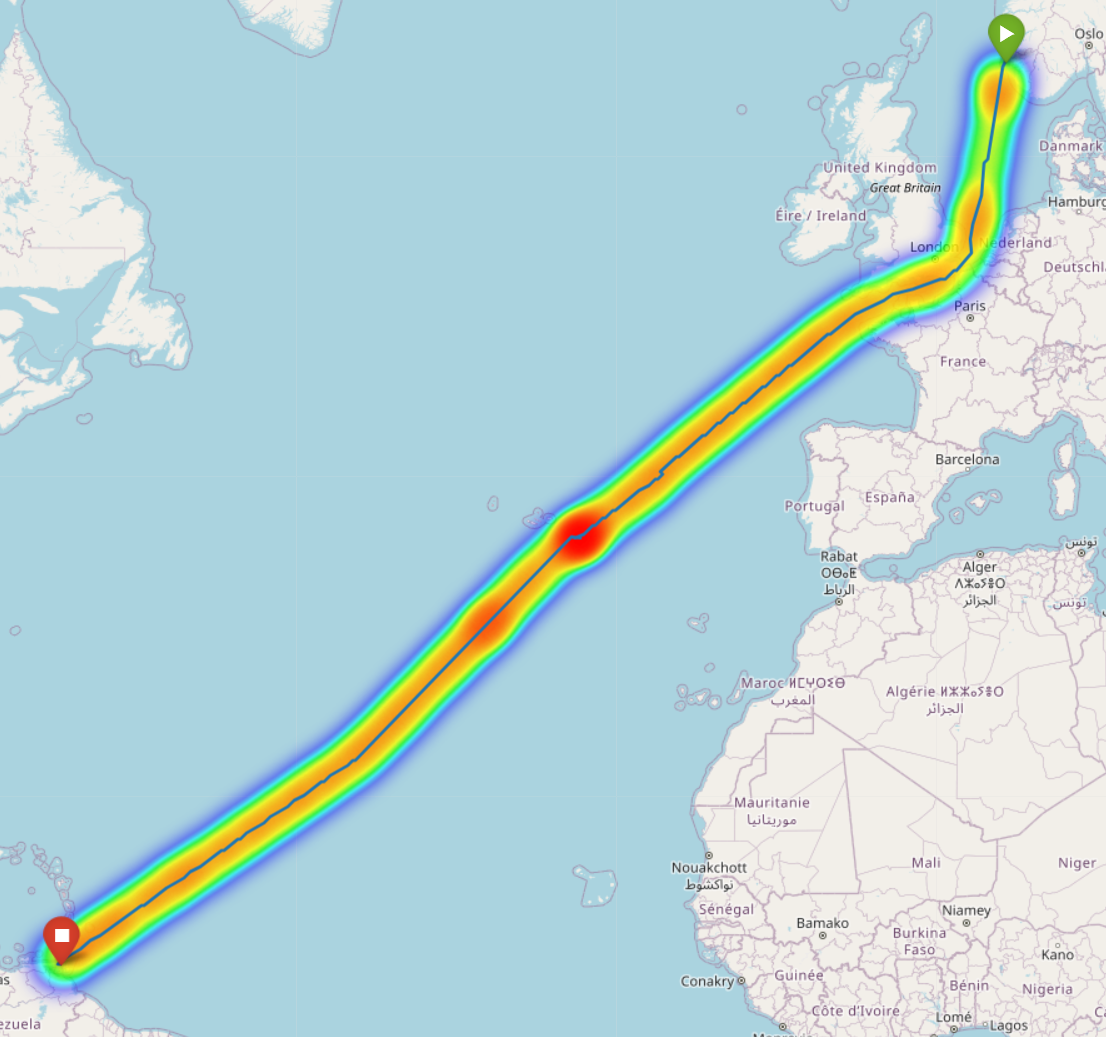
How an offshore support vessel adjusted its generator use during a 4,588-nautical-mile transit from Norway to Trinidad and Tobago.
- Norway to Trinidad and Tobago
- 4,588 nm
- Estimated MDO saving
- ≈63.7 t
- Estimated CO₂ saving
- ≈204.1 t
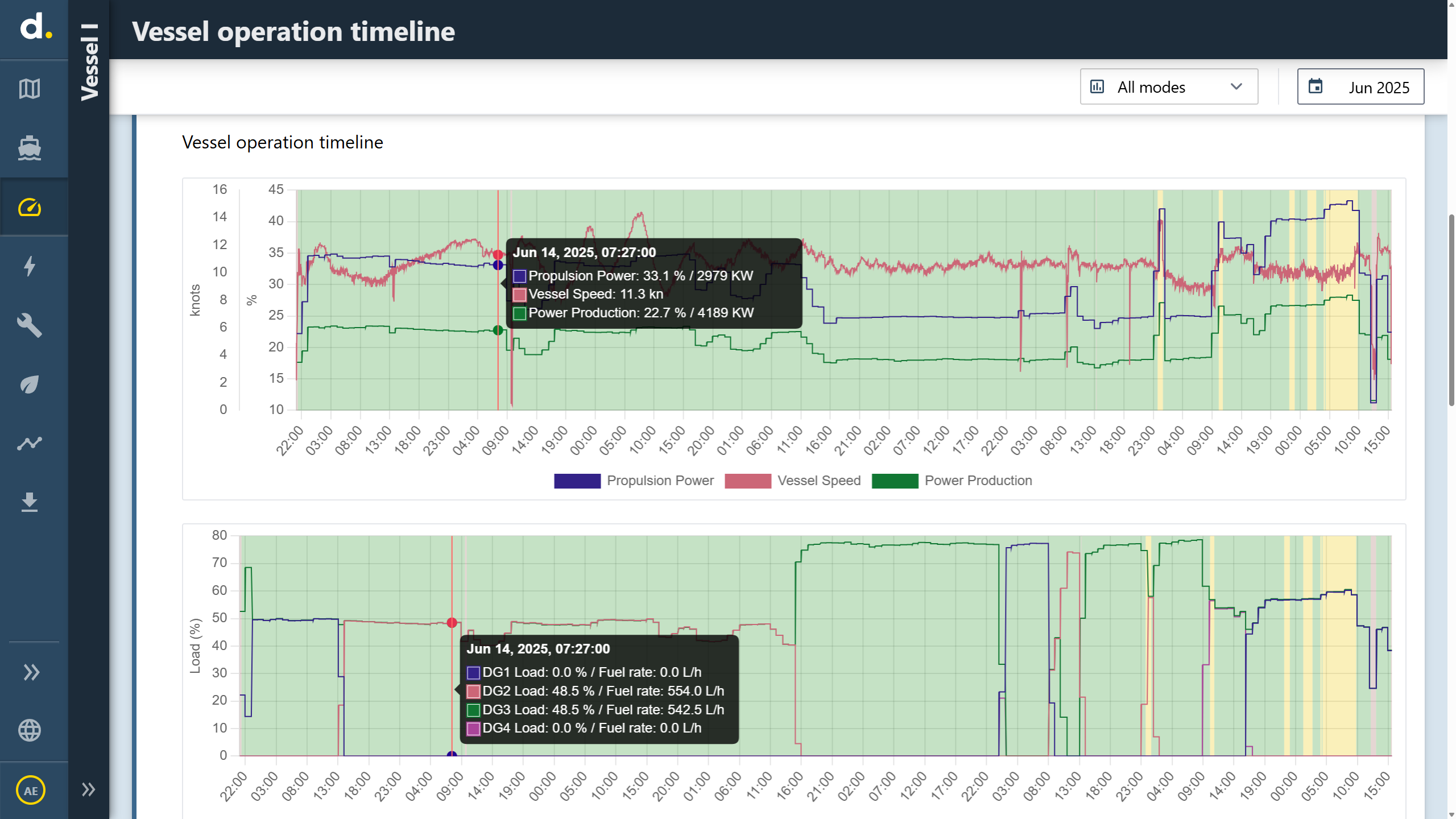
On an approximately 19-day ocean transit, the sustainability department worked with the captain to adjust the number of running diesel generators. Dipai’s analysis connected engine configuration to the power the operation required.
Match generator use to demand
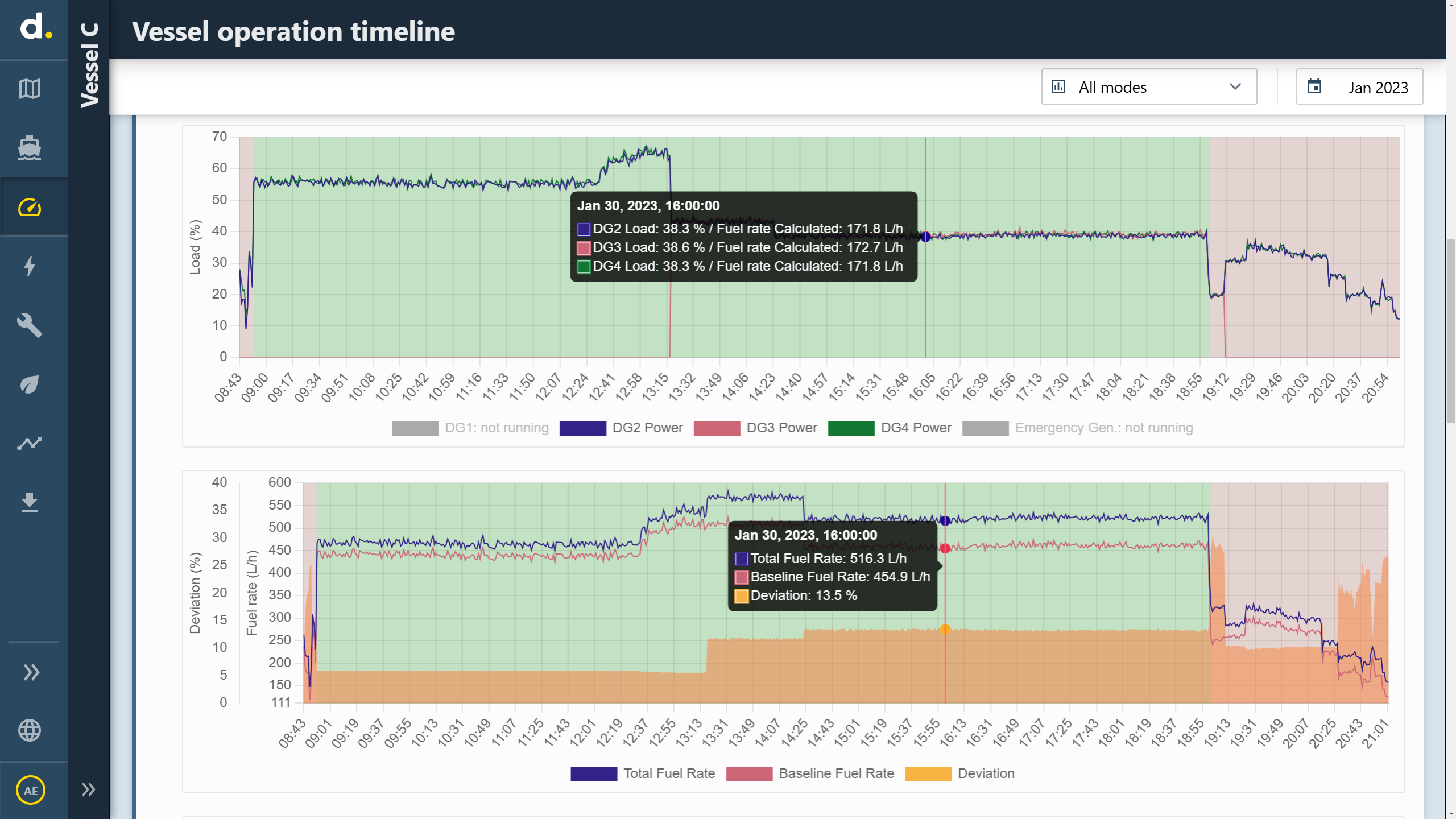
Running additional generators at a low load can create an opportunity to improve fuel efficiency. Dipai’s engine optimisation model uses machine learning to indicate a more favourable configuration for the operation.
A separate training example in the presentation compares three generators at about 40% load with two at about 60%. For that operating point, the indicated fuel-saving potential is around 61.4 litres per hour.
Apply the insight during the voyage
For the Norway–Trinidad and Tobago transit, the captain and sustainability department adjusted generator use together. The vessel ran on one diesel generator for 38% of the time and on two for the remaining 62%.
The voyage consumed 351.7 tonnes of marine diesel oil (MDO). The comparison includes the speed, propulsion demand and environmental conditions recorded for the different configurations.
Assess the result against a stated baseline
Compared with running two diesel generators for the entire transit, the presentation estimates savings of approximately 63.7 tonnes of MDO, 204.1 tonnes of CO₂ and 305 generator running hours.
These are estimates for this voyage against that defined alternative. They show how crews and onshore teams can use operational data to make engine-configuration decisions and assess their effect.
Voyage estimates compare the observed one-/two-generator mix with running two generators throughout. The 61.4 L/h training example is a separate operating case.