Operations
Give every vessel signal its operational context
Automatically identify transit, dynamic positioning, standby and port activity to build a useful foundation for fuel analysis.
A fuel reading becomes more useful when it can be connected to what the vessel was doing. Operational mode detection brings that context into the data foundation, so crews and onshore teams can review performance by activity.
Start with the operation
Vessel activity changes throughout a voyage. Transit, dynamic positioning, standby and port stays place different demands on the vessel. Reviewing those periods together can hide the operational context behind fuel consumption.
Turn sensor data into an operational timeline
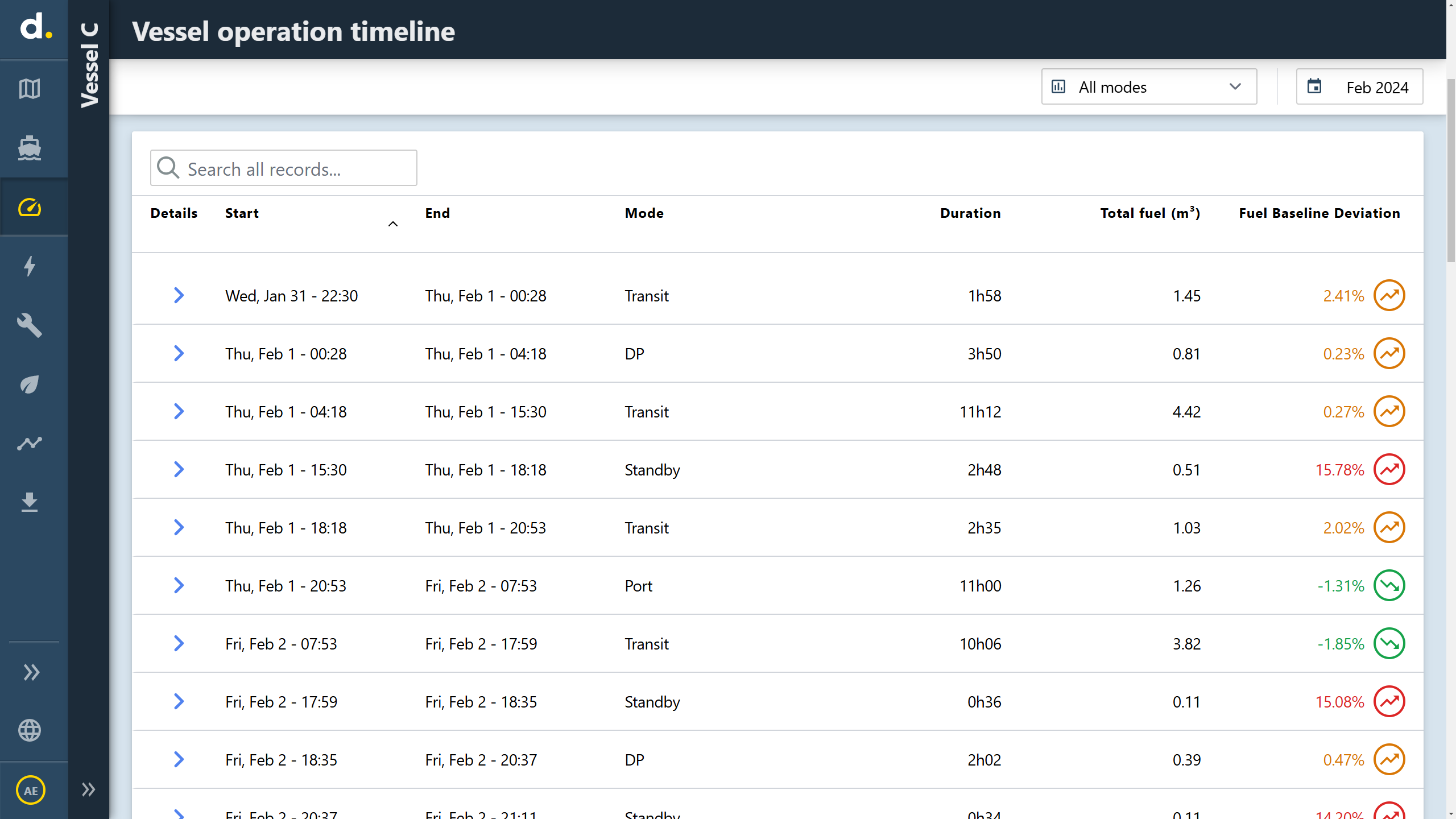
Dipai trains a model on vessel sensor data to detect operating modes automatically. The resulting timeline connects each activity to its start and end time, duration and fuel use.
Fuel reporting uses flowmeters and engine load curves. In the example, the timeline also shows fuel-baseline deviation for individual periods, making it easier to identify which activities warrant a closer look.
Build analysis on a consistent foundation
The value is a contextualised data foundation for analytics and insights. It gives the crew and onshore team a shared view of the vessel’s activities before moving on to questions about engine configuration, speed or maintenance.
Application focus: operational context and an accurate foundation for fuel reporting and analysis.